· 5 min read · Julia Krebs
Winning the Right Meetings and Events: Smarter Group Pricing and Lead Evaluation
September is when the enquiries for next year arrive. Planners are sourcing spring conferences, incentive trips and company events, and sales teams are under pressure to fill the calendar.
Meetings, incentives, conferences and events (MICE) can be some of the most valuable business a hotel takes. One event can fill rooms, the restaurant, the meeting space and the bar at the same time. But it can also be the most expensive business a hotel takes, when it pushes out guests who would have paid more, ties up space for weeks with an unconfirmed hold, or wins on a price that only covers the rooms.
The difference comes down to three skills: judging enquiries on profit, pricing by demand and responding fast.
1. Judge every enquiry on what it really adds
Most hotels still compare group enquiries on room rate or total revenue. Both can mislead. The question that matters is: what does this group add, compared with what the hotel would earn on those dates without it?
That means looking at:
- Total spend, not just rooms: food and beverage, meeting room hire, audiovisual equipment, bar and other extras
- Profit, not revenue: a euro of room revenue is worth far more than a euro of banquet revenue, and agency commission comes off the top
- Displacement: the individual guests the group pushes out on dates that would have sold anyway
- Cost and effort: set-up, staffing, and how much space the group blocks compared with what it uses
Here is how that plays out for two enquiries on the same dates:
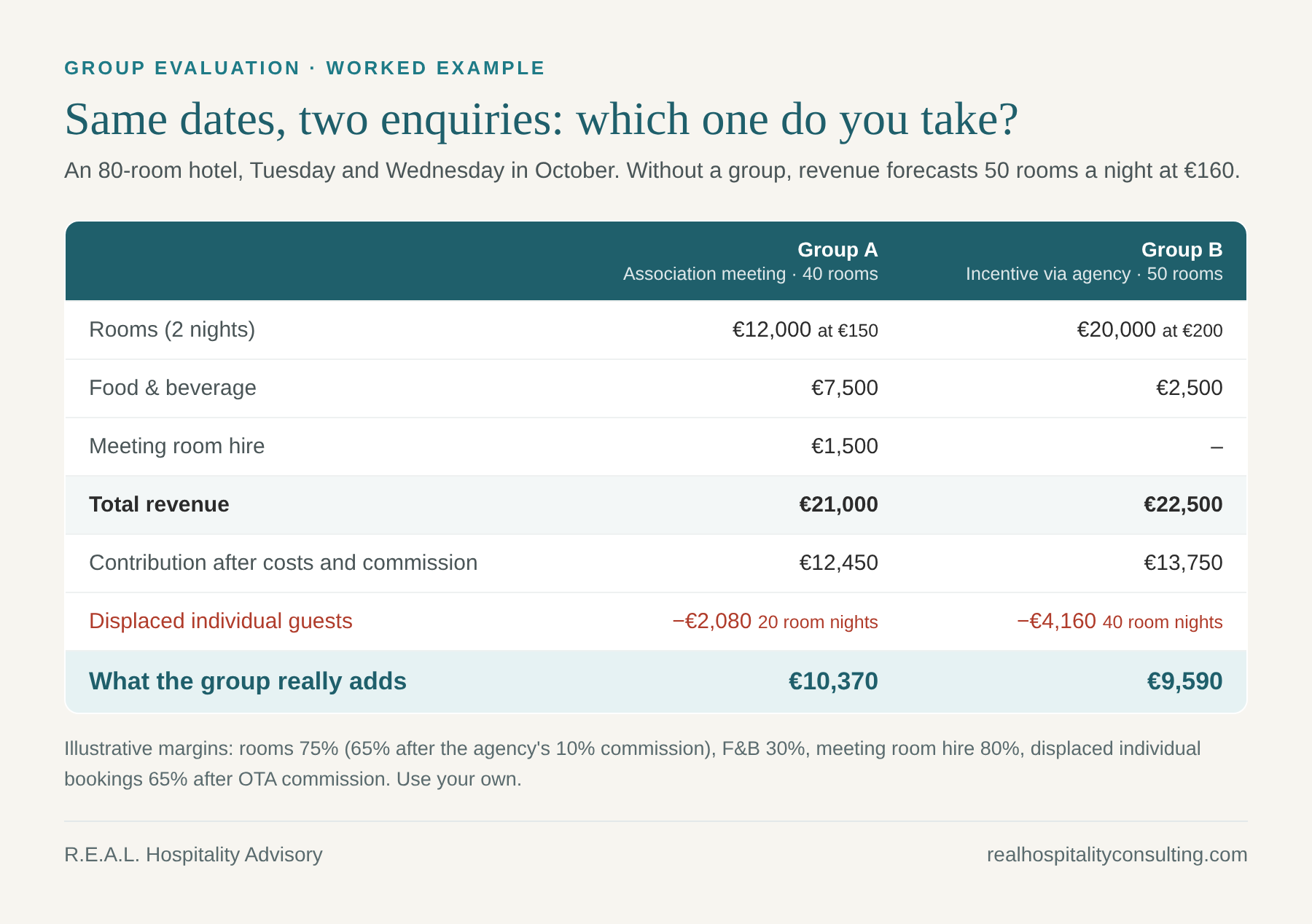
Group B brings more revenue and pays a higher room rate, so on first sight it looks like the better deal. But it spends little outside the rooms, pays agency commission and pushes out twice as many individual guests. Group A, with its lower rate, adds more to the hotel. The figures are illustrative; the method is what matters. Five minutes with a simple spreadsheet like this, before the proposal goes out, prevents a lot of expensive "yes" answers.
2. Score leads so sales knows where to spend its time
Not every enquiry deserves the same effort. A simple scoring sheet, agreed between sales and revenue, helps the team prioritise. Give each lead points for:
- Arrival on a need period (high) or a date that sells anyway (low)
- Estimated total value per room night, not room rate
- Repeat or multi-year potential
- Fit with your space: no oversized rooms blocked for small groups
- Likelihood of going ahead, based on the planner's history and how specific the request is
High scores get a fast, personal proposal. Low scores still get an answer, but from templates and at a price that reflects their impact.
3. Price meetings and events by demand
Many hotels still have one meeting package price all year. Rooms are priced by demand; events should be too:
- High-demand dates: higher minimum spends, room rates linked to the transient forecast, and shorter option periods
- Need periods: lower minimum spends, value-adds instead of discounts, and packages that include meeting room hire
- Day of week: a Monday-to-Wednesday event is usually worth more to an independent leisure hotel than a weekend one
- Lead time: a last-minute group in a quiet week can be welcome business; the same group requested a year ahead on a peak date may not be
Agree a minimum acceptable rate and minimum spend by season, so sales can quote quickly without asking for approval every time, and escalate only the exceptions.
4. Answer faster than your competitors
Planners notice speed. In Cvent's 2026 Planner Sourcing Report, most of the 1,650 planners surveyed said they expect an answer within four business days, and they rated clear, transparent proposals and easy access to venue information among the things that matter most. Meeting room specifications, photos and videos, and floor plans all ranked high in their decisions.
That gives independent hotels a real opening, because it rewards being organised more than being big:
- A same-day acknowledgement with a named contact
- Proposal templates with your seasonal pricing already built in
- An up-to-date fact sheet: room sizes and capacities by layout, floor plans, photos and standard menus
- A rule that every proposal goes out within two business days, with a follow-up date in the diary
5. Protect your space
Meeting space is perishable in the same way rooms are. A few rules prevent it from being blocked by business that never materialises:
- Match the group to the right room, not the biggest available one
- Set clear option dates and release unconfirmed holds on time
- Include attrition and cancellation terms in every contract, and track "wash", the gap between rooms blocked and rooms actually used, by type of group
- Review the event calendar in the weekly commercial meeting, next to the rooms forecast
6. Add value, don't discount
When you need to win a group, a value-add almost always costs less than a discount and protects your price for the next negotiation: a coffee break, a welcome drink, an upgrade for the organiser, waived audiovisual fees or a late check-out on departure day.
Your MICE checklist for this season
- Build a one-page group evaluation sheet that includes displacement and profit by revenue type.
- Agree minimum rates and minimum spends by season with your revenue lead.
- Introduce a simple lead score and use it to prioritise proposals.
- Commit to answering every enquiry within two business days.
- Refresh your meetings fact sheet: capacities, floor plans, photos and menus.
- Track wash and cancellations by group type, and use them in your next forecast.
How we can help
We help hotels set up group evaluation tools, seasonal pricing rules and the sales and revenue routines around them. If your sales team is busy with enquiries but you are not sure they are the right ones, book a free discovery call.